

Selectorized Versus Plate Loaded Machines
A leg press can look straightforward until the user needs to change resistance between sets. With selectorized versus plate loaded machines, that moment reveals the real difference: one changes load with a pin, while the other asks the user to manually add and remove plates. Neither format is automatically better. The right choice depends on who will train, how the facility operates, the available footprint, and the level of strength progression required.
For a premium home gym, a boutique studio, or a high-traffic commercial facility, this decision affects more than the feel of a single workout. It shapes equipment flow, member confidence, staff supervision, maintenance routines, and how easily people can use the space independently.
What Is a Selectorized Machine?
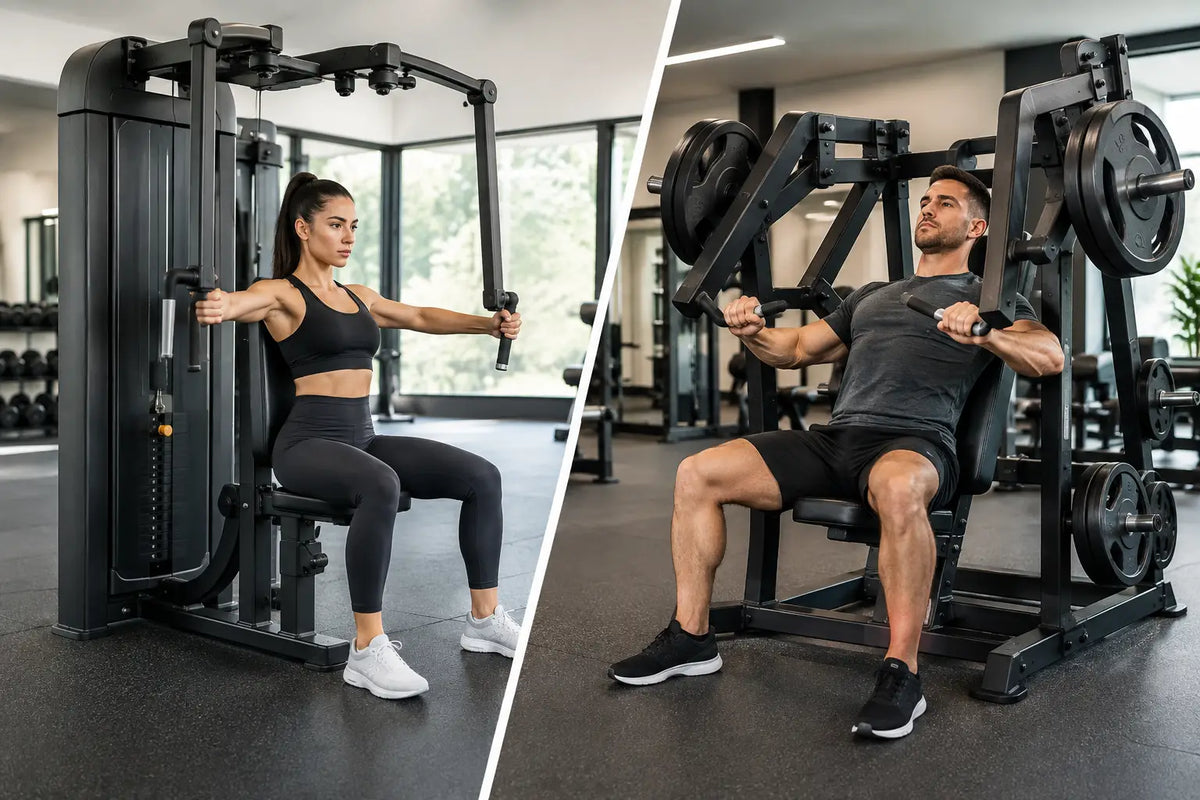
A selectorized machine uses an enclosed weight stack. The user selects resistance by inserting a magnetic or traditional selector pin into the desired weight plate, then performs the exercise through a guided movement path. Many commercial designs also offer small incremental adjustments, allowing users to progress in finer steps.
The appeal is immediate: changing resistance is fast, clear, and contained within the machine. There are no loose plates to carry across the floor or store on pegs. On a chest press, lat pulldown, leg extension, or seated row, the user can adjust the load in seconds and stay focused on position, tempo, and range of motion.
Selectorized equipment is especially effective where multiple people of varying experience levels will use the same station. Clear placards, defined start positions, and a predictable resistance system reduce the learning curve. This makes the format a strong fit for hotels, corporate wellness rooms, rehabilitation-oriented training environments, apartment gyms, and home gyms shared by several family members.
That guidance does not mean selectorized machines are only for beginners. A well-engineered commercial stack machine can provide substantial resistance, excellent stability, and a consistent training experience for experienced lifters. The limitation is usually not quality but load range and progression style. Once a strong user approaches the top of a stack, there may be less room to add resistance than with a plate-loaded alternative.
What Is a Plate Loaded Machine?
Plate loaded machines use Olympic plates or, in some cases, standard plates placed directly on loading horns. Instead of selecting a stack weight, the user determines resistance by adding plates to one or both sides of the machine.
This format is common in strength-focused facilities because it can accommodate a higher loading potential and allows exceptionally flexible progression. A plate-loaded hack squat, horizontal leg press, chest press, or high row can be loaded well beyond the practical capacity of many selectorized machines, provided the machine's stated maximum load is respected.
Plate-loaded designs also tend to appeal to users who want a more substantial, free-weight-adjacent training experience with the support of a guided path. The movement is still controlled by the machine's lever arms, pivots, and seat geometry, but the user sees and handles the physical load. For many dedicated lifters, that is part of the appeal.
The trade-off is operational. Plates must be available, organized, and returned after use. Load changes take longer, particularly for drop sets or shared workouts. Uneven loading is also possible if users do not add the same amount of weight to both sides. In a busy facility, this creates a greater need for clear floor systems, adequate plate storage, and attentive housekeeping.
Selectorized Versus Plate Loaded Machines: Key Differences
The most useful comparison is not about which category produces better results. Both can support productive strength training when the machine fits the user, the load is appropriate, and the exercise is performed with control. The meaningful differences are in resistance adjustment, loading ceiling, user experience, footprint, and facility management.
Resistance changes and workout pace
Selectorized machines are built for speed. A user can move from a warm-up set to a working set with a quick pin adjustment. This is valuable for circuit training, personal training sessions, and facilities where members expect efficient workouts. It also supports precise load management when different users rotate through the same station.
Plate-loaded machines take more time to adjust, but that is not always a drawback. For a strength-focused athlete performing several hard sets at one load, the adjustment process is minimal. The physical act of loading can feel more deliberate, and the machine can remain set up for heavier work without reaching a stack limit.
Load capacity and progression
Plate-loaded machines generally offer the greater ceiling for advanced strength work. They are a practical choice for commercial gyms serving experienced lifters, performance facilities, and serious home gym owners who want room to progress over years rather than months. Check both the maximum load capacity and the machine's recommended plate diameter, as these affect usable loading and clearance.
Selectorized equipment offers a more controlled progression system. Stack increments are easy to understand, and add-on microloading options on certain machines can help bridge larger weight jumps. For many users, this is more than enough. A controlled, repeatable 5- or 10-pound increase can be easier to manage than changing multiple plates on a lever arm.
Stability, biomechanics, and confidence
Both machine types use a fixed or semi-fixed movement path, but the quality of that path varies significantly by model. Evaluate pivot placement, seat adjustment range, handle position, back pad support, starting resistance, and how naturally the movement matches the intended exercise.
Selectorized stations often provide a more approachable setup, with intuitive adjustments and a contained stack. Plate-loaded equipment can deliver a more open, performance-oriented feel, but users must understand how to load it correctly and control the lever arms before beginning a set. In either category, smooth bearings, durable upholstery, and well-positioned adjustment points matter more than the label on the frame.
Space planning and visual order
A selectorized machine has a predictable footprint because the resistance lives inside its weight-stack shroud. This can make layout planning simpler in compact home gyms, hotel fitness rooms, and wellness spaces where a clean visual environment is part of the experience.
A plate-loaded machine needs working clearance around loading horns and enough nearby storage for plates. The listed machine dimensions are only the starting point. Plan for safe circulation, access to adjustment points, and the room required to load and unload plates without interfering with another station.
For commercial projects, a balanced layout often uses both formats. Selectorized units create an accessible strength circuit, while plate-loaded stations anchor the heavier training zone. This approach serves a wider range of members without making every user navigate a performance-focused floor.
Maintenance and daily operations
Selectorized machines consolidate resistance within the frame, which can reduce misplaced-equipment issues. They still require routine inspection of cables, pulleys, guide rods, pins, upholstery, and fasteners. The stack should move quietly and consistently through its full range.
Plate-loaded machines eliminate cables on many designs, but they introduce more contact points between plates and loading horns. Operators should inspect welds, pivot points, hardware, grips, and plate-storage systems. Keeping compatible plates organized protects the member experience and helps prevent unnecessary wear on equipment and flooring.
Which Machine Type Fits Your Facility?
Choose selectorized machines when ease of use, quick resistance changes, guided setup, and a polished training environment are the priority. They are particularly effective for multi-user home gyms, hospitality fitness centers, beginner-to-intermediate populations, and circuits where users move efficiently from station to station.
Choose plate-loaded machines when high loading capacity, long-term strength progression, and a more athlete-focused training experience lead the brief. They suit dedicated lifters, performance gyms, and commercial floors with the space and operational discipline to manage plates properly.
For many buyers, the strongest answer is not one category or the other. A compact selectorized lat pulldown or functional trainer can make daily training accessible, while a plate-loaded leg press, hack squat, or chest press provides a higher-performance strength option. Match the equipment mix to the people who will use it most often, not simply to the most impressive specification on paper.
Before purchasing, verify maximum user weight where applicable, maximum load capacity, machine dimensions, ceiling clearance, plate compatibility, warranty coverage, and delivery access. For commercial sites, confirm that the proposed layout leaves suitable circulation space and allows for professional assembly and future servicing.
The machine that earns its floor space is the one people will use confidently, consistently, and with enough progression available to keep their training moving forward.
Red Light Panel Review for Premium Home GymsNext →
Resistance Equipment Selection Guide for Better Training