

Resistance Equipment Selection Guide for Better Training

A well-equipped training space is not defined by the number of machines on the floor. It is defined by whether each piece gives users a clear, repeatable way to progress. This resistance equipment selection guide helps you choose the right mix of free weights, cable systems, plate-loaded machines, selectorized equipment, and compact resistance tools based on training goals, available space, and expected daily use.
For a home gym, the right purchase may be an adjustable bench, power rack, and cable attachment that cover a wide range of movement patterns without taking over the room. For a commercial facility, durability, user flow, adjustment simplicity, and service access often matter just as much as exercise variety. The best solution depends on who will train, how they will train, and what the equipment must withstand over time.
Start With the Training Outcome
Resistance equipment should support a defined training plan rather than force users into whatever movements happen to be available. Begin by identifying the primary use of the space. A strength-focused home gym has different requirements than a hotel fitness room, physiotherapy practice, boutique studio, or high-traffic health club.
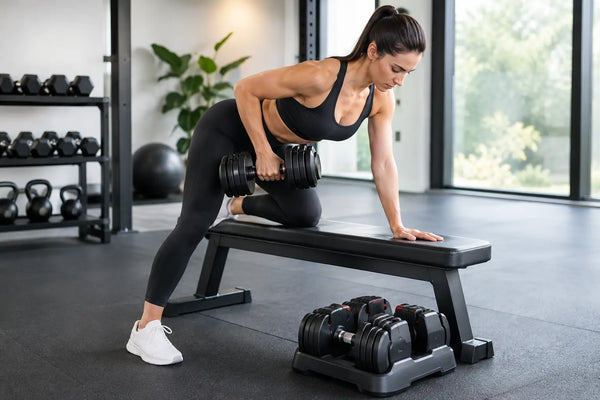
If the priority is building foundational strength, a rack, barbell, plates, and adjustable bench create the most direct path to progressive loading. These tools allow squats, presses, pulls, hinges, carries, and variations that can evolve as skill and strength improve. They also offer excellent long-term value because the resistance is not limited to a fixed weight stack.
If the priority is general fitness, body composition, or guided training for multiple users, selectorized machines and cable stations can be more approachable. Weight stacks change quickly, movement paths are easier to understand, and users can move through a session with less setup. This can be particularly valuable in shared residential gyms, hotels, and corporate wellness spaces where training experience varies widely.
Athletic performance facilities often benefit from both. Free weights develop loading capacity and athletic movement patterns, while cables, sleds, landmines, and functional trainers add rotational, unilateral, and standing exercises. The goal is not to choose one category over another. It is to avoid gaps that make a well-designed program unnecessarily difficult to deliver.
Resistance Equipment Selection Guide by Type
Free Weights and Racks
Barbells, dumbbells, kettlebells, plates, benches, and racks are the foundation of many serious training spaces. They offer flexible resistance, broad exercise selection, and straightforward progression. A quality power rack can support barbell work, pull-ups, safety arms, storage, and cable-based attachments in one footprint.
The trade-off is that free weights demand more technique, setup time, and clear floor space. Consider the rack’s height, depth, hole spacing, maximum load rating, and compatibility with safeties and attachments. Bench capacity matters too. A bench should be stable under both the lifter and the load, with adjustment points that feel secure and practical during repeated use.
For commercial settings, storage is part of the equipment decision. Dumbbells and plates need accessible, organized homes that protect the floor and keep training areas clear. A premium rack system with integrated storage can improve the look and function of a facility while reducing unnecessary movement between exercises.
Cable Machines and Functional Trainers
Cable resistance is one of the most versatile categories available. Functional trainers provide adjustable pulleys, multiple handle options, and resistance from different angles. They work well for presses, rows, pulldowns, curls, anti-rotation drills, cable fly variations, and single-arm or single-leg training.
When comparing cable systems, look beyond the overall weight-stack number. The pulley ratio changes how the resistance feels. A 2:1 ratio gives a smoother feel and greater cable travel, but the user experiences half the listed stack weight. A 1:1 ratio provides the full stack resistance, which may suit stronger users and heavy pulling movements. Neither is automatically better. The right choice depends on the intended exercises and the users’ strength levels.
Also review pulley adjustment range, handle positions, cable travel, machine depth, and whether the unit can be positioned against a wall. A dual-stack functional trainer may be ideal for a compact premium home gym, while a larger cable crossover can better serve a busy club floor with multiple training stations.
Selectorized and Plate-Loaded Machines
Selectorized machines use a pin-selected weight stack. They are efficient, intuitive, and especially useful when different users rotate through equipment throughout the day. Well-designed machines support stable positioning and consistent movement paths, allowing users to focus on controlled resistance without managing plate changes.
Plate-loaded machines typically offer a more open feel and can provide substantial loading capacity. They are popular for leg presses, chest presses, rows, and other major strength movements. However, they require compatible plates, loading and unloading time, and enough circulation space for users to move safely around the equipment.
For either type, prioritize biomechanics over a long feature list. Seat adjustment should be quick and clearly marked. Contact points should feel stable. Handles should accommodate common user sizes and grip preferences. A machine that looks impressive but fits only a narrow range of users can create frustration in a commercial setting.
Bands, Suspension Tools, and Compact Resistance
Resistance bands, suspension trainers, and compact cable tools are valuable additions, not replacements for every primary strength station. They are easy to store, useful for warm-ups, mobility-focused movement, travel, small-group sessions, and adding accommodating resistance to barbell training.
Their main limitation is precision. Band resistance changes as the band stretches, and identifying an exact load is less straightforward than using a barbell or weight stack. For users tracking progressive overload closely, bands work best as a supplement to equipment with measurable resistance. In smaller homes and studios, however, they can extend training options without consuming valuable floor area.
Match Equipment to the Room, Not Just the Catalog
Dimensions should be assessed as operating space, not simply product footprint. A rack may fit neatly within a room on paper, yet bar loading, bench adjustments, and plate storage can make the training zone feel restricted. A functional trainer needs room for users to step away from the machine, use long cable travel, and change attachments comfortably.
Before selecting equipment, map the actual room with door swings, windows, ceiling height, walkways, electrical outlets where relevant, and the route required for delivery and assembly. Consider flooring protection and the amount of clearance needed around moving components. This prevents a common high-cost mistake: buying equipment that fits the room but does not function well inside it.
For hospitality and commercial environments, layout affects member experience. Place equipment so users can move between stations without crossing into another person’s lifting area. Keep high-use pieces easy to access, and avoid clustering every heavy lower-body station in a single tight zone. A thoughtful layout feels calmer, safer, and more premium even before the first workout begins.
Evaluate Specifications That Affect Daily Use
Product specifications are not just technical details. They determine how equipment feels after months or years of training. Start with maximum user weight and maximum load capacity, particularly for benches, racks, pull-up stations, and adjustable equipment. These figures should align with the intended user base and training style.
For cable machines, inspect stack increments, pulley ratio, cable construction, guide rods, and adjustment mechanism. Smaller increments can be useful for gradual progression, while larger stack capacity may matter for stronger users or commercial settings. For benches, assess pad thickness, frame construction, adjustment range, and whether the bench is easy to move without compromising stability.
Warranty coverage deserves the same attention as construction. Different components may have different coverage periods for the frame, moving parts, upholstery, cables, and labor. Equipment used in a commercial setting must be covered for that use. Residential warranties do not automatically translate to a studio, hotel, or facility with continuous traffic.
Build a Mix That Can Progress
A good equipment plan gives beginners a simple starting point without limiting experienced users. For many premium home gyms, that means combining one main strength anchor, such as a rack or functional trainer, with an adjustable bench, practical storage, and a manageable selection of free weights. This creates a complete training environment without filling every corner with single-purpose machines.
Commercial buyers should think in training zones rather than isolated products. A free-weight zone, cable area, machine circuit, functional-training space, and recovery or mobility area can each serve a different purpose. The right balance depends on membership profile, staffing, class formats, and peak-hour demand.
At 1 REP MAX Fitness, equipment selection can be approached as part of the wider training environment, including product comparison, layout planning, delivery, assembly, and ongoing maintenance support. That is especially useful when a facility needs commercial-grade equipment that must work as a connected system rather than a collection of individual purchases.
The most worthwhile resistance equipment is the equipment people will use consistently and progress with confidently. Choose a few capable pieces that fit the training goal, the room, and the expected level of use, then leave enough space for every repetition to feel purposeful.
Selectorized Versus Plate Loaded MachinesNext →
Planning a Longevity and Recovery Space with Wellsystem