

Longevity UAE for Smarter Wellness Spaces

A longevity UAE strategy is not built around one machine, one trend, or an intense 30-day challenge. It is built around an environment that makes consistent movement, strength work, cardiovascular conditioning, and purposeful recovery easier to maintain for years. For a private home, boutique studio, hospitality property, or wellness clinic, equipment selection becomes part of the long-term experience you create.
The strongest wellness spaces combine practical engineering with a clear understanding of how people actually train. A treadmill needs a stable deck, appropriate motor performance, and enough running area for confident use. A power rack needs dependable load capacity and a layout that supports safe progression. Recovery equipment needs to fit naturally into a routine rather than becoming an expensive feature that sits unused.
What Longevity UAE Means for Modern Wellness Spaces
Longevity is often discussed as a health category, but for fitness and wellness operators, it is also a design and operations question. Which equipment encourages repeat use? What will still perform after thousands of sessions? How can a space serve beginners, experienced lifters, guests, rehabilitation clients, and personal-training members without feeling crowded or complicated?
The answer depends on the setting. A high-performance home gym may prioritize compact strength equipment, quiet cardio, and a recovery corner that fits around family life. A luxury hotel may need intuitive machines that guests can use with minimal instruction, along with finishes that support the property’s overall standard. A clinic or wellness center may need equipment selected around controlled movement, accessibility, and professional durability.
In each case, longevity is less about chasing novelty and more about reducing friction. When equipment is comfortable, stable, easy to adjust, and suited to its users, it is far more likely to become part of a lasting routine.
Consistency Needs More Than Motivation
Motivation changes from week to week. Equipment design does not. Features such as step-through frames, quick resistance adjustments, clear displays, transport wheels, adjustable seating, and correctly positioned handles can make the difference between occasional use and a repeatable session.
This is why specifications matter. A commercial-grade treadmill motor, a rowing machine with a proven resistance system, or an adjustable bench with secure ladder-style adjustment is not simply a technical upgrade. It supports smoother operation, user confidence, and a more dependable training experience over time.
Build the Foundation With Strength Training
Strength training deserves a central place in any longevity-focused environment. Maintaining muscular strength supports everyday capability, from carrying luggage and climbing stairs to improving control during sport and recreation. The right setup should allow gradual progression without requiring an oversized footprint.
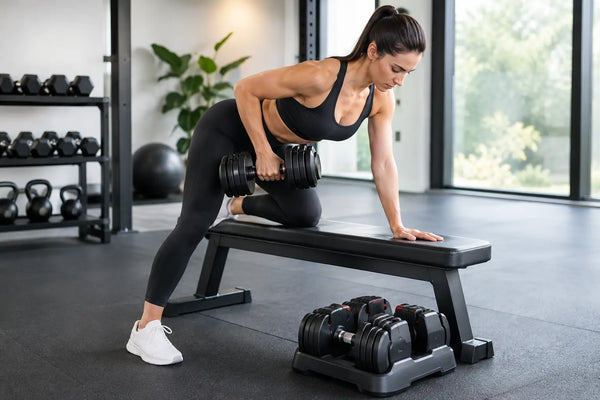
For residential spaces, an adjustable bench paired with adjustable dumbbells, a functional trainer, or a compact rack can create broad training options in a limited area. For larger home gyms and commercial facilities, a power rack, Smith machine, cable system, and organized free-weight storage can support multiple users and more advanced programming.
The best configuration is not always the largest one. A full commercial rack may be the right choice for a dedicated training room, while a well-designed all-in-one trainer may suit a premium apartment gym where floor space and visual order matter equally. Before choosing, assess ceiling height, equipment dimensions, access routes, intended user numbers, and the training styles the space must support.
Prioritize Adjustment, Stability, and Progression
A longevity-oriented strength area should accommodate changes in ability. Beginners need clear starting positions and manageable resistance. Experienced users need enough load capacity, cable travel, and adjustability to continue progressing. Commercial operators also need components that handle repeated adjustments throughout the day.
Look beyond headline features. Bench pad thickness and frame stability affect comfort under load. Cable ratios influence how resistance feels through a movement. Rack hole spacing and attachment compatibility shape how precisely users can set safety arms and bar positions. These details are where premium equipment earns its place.
Use Cardio Equipment People Will Return To
Cardio should support different preferences and impact levels. Some people want a challenging run; others prefer walking, cycling, rowing, or cross-training. A well-planned facility does not force every user into the same modality.
Treadmills remain a practical anchor because walking is accessible and running offers a familiar training option. For regular use, consider motor performance, deck cushioning, incline range, running-surface dimensions, maximum user capacity, and console usability. In a shared setting, intuitive controls are especially valuable because they shorten the learning curve for new users.
Indoor bikes and air bikes suit users who prefer controlled, lower-impact conditioning or intense interval sessions. Rowers provide full-body work in a compact linear footprint, while cross trainers offer a smooth option for users who want less impact than running. The right mix depends on your audience, but variety has a clear operational benefit: it gives members, guests, and family users more reasons to remain consistent.
For hotels, corporate facilities, and wellness centers, equipment spacing also matters. Users need adequate room to mount, dismount, adjust settings, and move safely through the area. A floor plan that looks efficient on paper can feel restrictive if circulation and service access are ignored.
Make Recovery a Deliberate Part of the Layout
Recovery equipment belongs in the conversation when it helps users maintain a realistic rhythm of training and restoration. Massage devices, foam rollers, mobility tools, hydrotherapy systems, and red light panels can create a more complete wellness environment when selected responsibly and positioned with purpose.
The key is to avoid treating recovery as a decorative add-on. A dedicated recovery zone should feel calm, clean, and easy to use. Provide enough clearance around equipment, choose finishes suitable for the environment, and consider how users will move from training into recovery without disrupting the rest of the facility.
For a private home, this may be a compact corner with a quality massage device, mat storage, and mobility accessories. For a spa, clinic, or luxury hospitality setting, it may be a distinct experience with professional-grade hydrotherapy or light-based wellness equipment. The appropriate solution depends on available utilities, daily user volume, maintenance requirements, and the level of staff support available.
Recovery equipment should be presented as a complement to sensible training, rest, and professional guidance when needed. It is not a substitute for individualized medical care or a guarantee of any health outcome.
Design for the People Who Will Use It
A facility can have excellent equipment and still underperform if the selection does not match its users. A boutique training studio may benefit from open functional space, sled-compatible flooring, cable stations, and storage that keeps accessories visible but organized. A physiotherapy practice may prioritize controlled resistance, accessible cardio, and equipment that supports gradual movement under professional supervision.
At home, the question is often simpler: what will you use three or four times a week? A compact machine with low setup time may provide more value than a larger system that requires constant rearranging. For dedicated athletes, the calculation can shift toward heavier load ratings, barbell compatibility, specialized benches, and performance-focused cardio.
This is also where a detailed consultation adds value. At 1 REP MAX Fitness, equipment planning can bring together product specifications, room dimensions, training goals, delivery requirements, and long-term maintenance considerations before the space is finalized.
Plan for Ownership, Not Just Installation
Buying premium equipment is a long-term operational decision. Commercial gyms, hotels, and clinics should consider warranty coverage, expected service intervals, access for maintenance, replacement-part availability, and manufacturer guidance. Residential buyers should consider noise, flooring protection, power requirements, cleaning needs, and whether equipment can be moved if the layout changes.
Durability is not only about a heavy frame. It includes upholstery that holds up to regular cleaning, bearings designed for repeated use, stable bases, corrosion-resistant finishes where appropriate, and consoles that remain clear and responsive. For commercial settings, these details protect uptime and the user experience.
A good wellness space should feel easier to use six months after installation than it did on opening day. Choose equipment that meets users where they are, leaves room for progression, and makes regular movement a natural part of the environment.
Wellness Center Fitout That Performs for MembersNext →
Rowing Machine Dimensions for Premium Home Gyms