

How to Set Up UAE Wellness Gym That Performs

A premium wellness facility is not built by placing a few treadmills beside a massage table. If your goal is to set up a UAE wellness gym, the real work starts with defining how people will move through the space, what outcomes they expect, and how every machine will perform during daily use.
For a hotel, clinic, corporate campus, boutique studio, or high-spec home, the equipment mix must feel intentional. Strength training, cardiovascular conditioning, mobility, Pilates, and recovery can sit under one roof, but they should not compete for floor space, power capacity, or user attention. The strongest facilities make training easier to start, easier to sustain, and visibly worth returning to.
Start With the Operating Model
Before reviewing equipment specifications, identify the facility's primary use. A residential wellness gym may prioritize compact storage, quiet operation, connected cardio, and equipment that supports multiple users with different experience levels. A hospitality gym needs intuitive machines, durable upholstery, and an elevated visual finish that works for international guests without a lengthy induction.
A performance-focused club has different requirements. It may need open functional-training space, higher dumbbell capacities, multiple cable stations, and cardio equipment designed for peak-hour turnover. A physiotherapy or longevity environment may place greater emphasis on controlled resistance, accessible entry points, Pilates equipment, and recovery modalities that complement supervised programming.
This is where trade-offs become clear. A larger strength floor provides more training variety, but it can make circulation feel crowded if cardio and warm-up areas are not planned around it. Adding specialist recovery equipment can differentiate the facility, but only when staffing, privacy, cleaning procedures, and user education are in place. Buy for the operating model, not for a trend cycle.
Plan the Floor Before You Choose Machines
A good layout protects both the user experience and the equipment investment. Begin with a measured floor plan that accounts for entry routes, clear walkways, ceiling height, glazing, columns, doors, ventilation points, and the space needed to use each product safely. Equipment dimensions alone are not enough. A treadmill, power rack, rowing machine, or adjustable bench needs working clearance around it.
Organize the room into practical zones. Cardio is often best placed where users have a clear view and adequate airflow. Strength equipment benefits from stable flooring, logical weight storage, and room for spotters or coaches to move. Functional training requires uncluttered open space, while recovery typically works best in a quieter area with a more private feel.
For commercial projects, circulation matters as much as square footage. Members should be able to move from warm-up to training to cooldown without crossing through another person's lifting area. Staff should have clear sightlines to high-use zones. Service access also deserves attention: commercial machines eventually require inspection and maintenance, so placing equipment tightly against walls may create avoidable problems later.
Flooring, power, and environment affect performance
Flooring should match the activity. Dense rubber flooring supports free weights and functional training, while purpose-built surfaces may suit Pilates, stretching, or recovery rooms. Confirm the finished floor level before ordering racks, cable systems, or cardio lines, particularly where ceiling clearances are limited.
Powered cardio equipment needs planned electrical access rather than extension leads crossing a floor. Heat, humidity, and direct sun exposure can also affect comfort and equipment longevity. Work with qualified project professionals where building approvals, electrical capacity, ventilation, or structural requirements apply. The fitness plan should coordinate with the wider project, not be treated as a final furnishing decision.
Select Equipment by Training Need
When you set up a UAE wellness gym, a balanced equipment mix generally outperforms a room full of single-purpose machines. Start with the training behaviors you want to support, then select products with appropriate dimensions, resistance design, load capacity, and warranty coverage.
For cardiovascular training, commercial treadmills, cross trainers, bikes, rowers, and air bikes cover distinct needs. Treadmills remain familiar and versatile, but they need more floor depth and power planning. Rowers offer full-body conditioning with a smaller footprint when stored appropriately. Air bikes create intense interval options without the complexity of a motorized deck. Cross trainers may be a strong choice for users who prefer a low-impact motion.
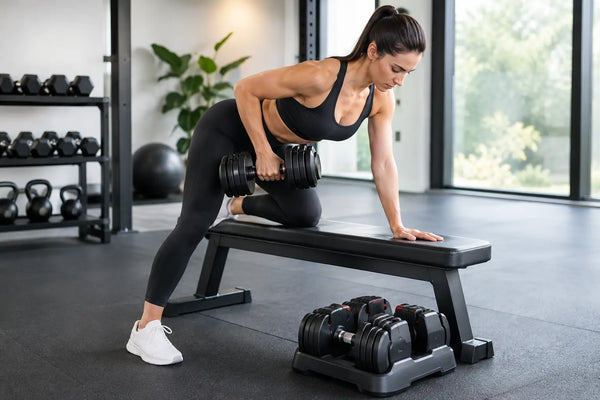
Strength equipment should offer a clear progression path. A well-planned facility may combine selectorized machines for accessible guided movement with free weights, benches, racks, and cable systems for broader training variety. Adjustable benches, dumbbell storage, and plate trees are not secondary purchases. They determine whether the floor remains organized and whether users can train without searching for equipment.
For a compact premium home gym, a dual-adjustable pulley, adjustable bench, compact rack, and carefully chosen dumbbell range can deliver substantial versatility. In a larger commercial environment, dedicated cable stations, Smith machines, plate-loaded equipment, and multiple benches may be justified by traffic and programming needs. The correct choice depends on projected usage, coaching model, and available supervision.
Add recovery with a purpose
Recovery equipment should extend the facility experience, not become a decorative afterthought. Massage tools, foam rollers, mobility stations, and selected professional recovery solutions can support cooldown routines and member comfort. More advanced modalities may suit spas, wellness centers, and longevity-focused spaces when they are introduced with clear operating protocols and proper guidance.
The key is integration. Place mobility tools where people will actually use them, such as near stretching space or at the end of a training route. If recovery is a paid service or bookable experience, create privacy, define cleaning standards, and make the transition from training floor to recovery zone feel deliberate.
Prioritize Durability and Usability
Premium equipment earns its value through the details users notice every session: stable frames, smooth resistance, comfortable contact points, clear adjustments, intuitive consoles, and finishes that hold up under frequent cleaning. Commercial specifications are especially relevant for hotels, clubs, and corporate facilities where equipment may be used for long hours by people with very different body sizes and training backgrounds.
Review the technical data before making comparisons. For cardio, look at motor type, maximum user capacity, running surface, incline range, flywheel system, and console features. For strength equipment, assess frame construction, pulley ratios, maximum load, adjustment range, storage compatibility, and the physical footprint of the machine in use.
Do not assume that the biggest machine is automatically the best fit. A commercial treadmill may offer exceptional durability, but it may not be appropriate for a small room with low ceiling clearance. A large multi-station unit can appear efficient on paper, yet create queues if its exercise positions are too limited for the number of users. Equipment should solve a specific operational problem.
Build a Service Plan Into the Purchase
The facility opening is only the start of the equipment lifecycle. Delivery, assembly, testing, preventive maintenance, and access to support all influence the long-term experience. This is particularly important for high-use cardio, cable systems, and large installations where downtime affects member satisfaction.
Specify who will receive the equipment, where it will be assembled, and whether access routes include elevators, tight corridors, or restricted delivery windows. Keep product documentation, warranty information, and maintenance schedules available to the operations team. A simple daily walkthrough can catch loose accessories, misplaced weights, console issues, and upholstery damage before they become larger disruptions.
For larger projects, working with a provider that can support layout planning, curated equipment selection, delivery, assembly, and after-sales maintenance reduces handoffs. 1 REP MAX Fitness can help align professional-grade cardio, strength, functional training, Pilates, and recovery equipment with the demands of a complete wellness environment.
Make the Experience Worth Repeating
The most successful wellness gyms make good choices feel obvious. A first-time guest can find the warm-up area, adjust a machine without frustration, locate the right weights, and finish with enough space to reset. A regular member can progress without outgrowing the room. A facilities manager can keep the environment clean, presentable, and operational without constant workarounds.
Start with the user journey, then let the floor plan and specifications guide the equipment list. When every zone has a purpose and every product has room to perform, the wellness gym becomes more than an amenity. It becomes a reason people choose the property, return to the facility, and keep training.
How to Choose Commercial Gym Flooring for Your FacilityNext →
Rack Versus Smith Machine: Which Fits Your Gym?