

How to Plan a Compact Home Gym That Performs
A well-designed training space does not need a dedicated garage or a spare villa wing. To plan a compact home gym properly, start with the movements you want to repeat every week, then choose equipment that supports those movements without turning the room into a storage area. The result should feel purposeful: enough clearance to train confidently, fast transitions between exercises, and equipment built to perform for years.
For most homes, the best compact gym is not the one with the most machines. It is the one that removes the barriers between you and a consistent session.
Start With the Room, Not the Equipment
Measure the usable training zone before comparing products. Record the length, width, and ceiling height, then note doors, windows, outlets, air-conditioning vents, and furniture that cannot move. A room may look generous when empty but become restrictive once a bench is unfolded, an incline treadmill is in use, or plates are loaded onto a bar.
Leave clearance for the equipment's working position, not only its stored footprint. A folding treadmill needs room behind the deck for safe entry and exit. A rower needs its full rail length while in use. A power rack requires overhead clearance for pull-ups and enough space around the uprights to load a bar comfortably. Manufacturer dimensions are the correct starting point, but your training movement determines the final layout.
Flooring deserves the same attention. Quality rubber flooring helps protect finished surfaces, reduces equipment movement, and creates a more secure base for free-weight training. In apartments or multi-level homes, it can also help reduce transmitted noise. Confirm building requirements and room load considerations with qualified professionals where needed, especially before installing heavy strength equipment.
Plan a Compact Home Gym Around Your Training Priority
Trying to fit a full commercial facility into a small room usually produces a compromised setup. Decide what matters most for the next 12 months: strength progression, cardio conditioning, athletic movement, mobility work, or a balanced mix. Your primary goal should receive the best floor position and the largest share of the budget.
For strength-focused training
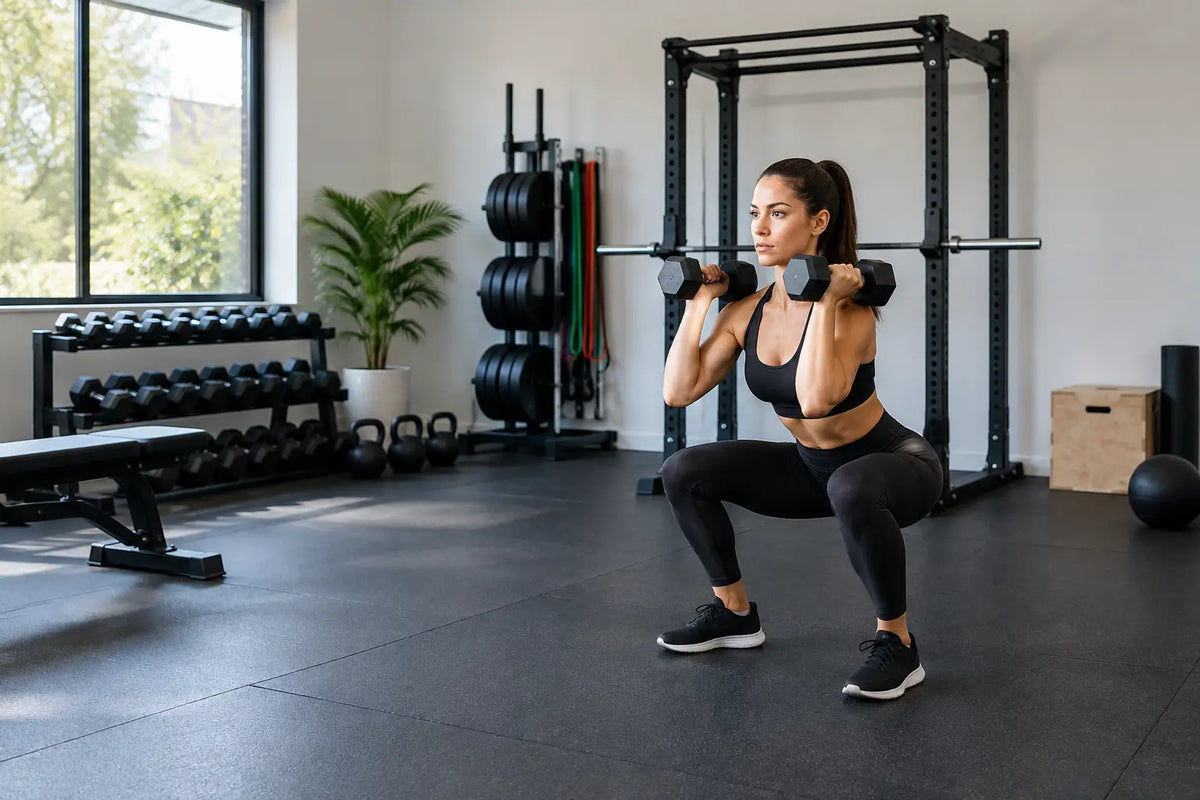
A compact rack, adjustable bench, barbell, and carefully selected plates can provide an exceptional training base. With the right rack attachments, this footprint can support squats, presses, pulls, lunges, rows, and bodyweight work. A functional trainer or cable machine is another strong option when you want smooth resistance, quick exercise changes, and less reliance on loose accessories.
The trade-off is simple. A rack and free weights deliver broad progression and a familiar strength-training feel, but they require plate storage, bar clearance, and disciplined setup. A cable-based station can make a room feel more organized and accessible for multiple users, although it may not replace the loading capacity or barbell specificity needed by dedicated powerlifters.
For cardio-focused training
Choose one cardio machine that you will genuinely use. A treadmill suits walkers and runners who value a natural stride and controlled speed changes. A rowing machine offers full-body conditioning with a long but narrow footprint. An air bike is highly effective in a small zone and responds directly to effort, while a cross trainer can be a practical choice for users who prefer low-impact motion.
Do not judge cardio equipment by footprint alone. Consider access height, moving parts, handle sweep, and storage position. A foldable treadmill may be ideal for a multipurpose room, while a commercial-grade non-folding model can be a better fit where daily high-volume use and long-term durability matter more than storage.
For a balanced setup
In a compact room, a balanced gym often works best with one major strength station, one cardio piece, and an adjustable bench or open floor area. This keeps training varied without creating bottlenecks. For example, a functional trainer paired with a rower and adjustable bench supports resistance circuits, steady-state cardio, core work, and mobility sessions in a highly efficient layout.
Choose Equipment That Does More Than One Job
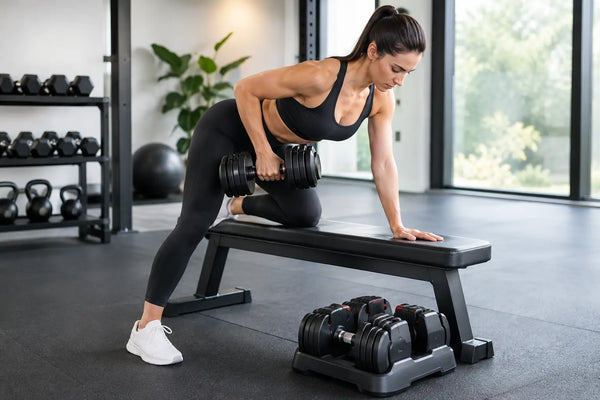
Versatility matters, but only when it improves your actual program. An adjustable bench earns its space because it supports flat and incline pressing, seated work, rows, step-ups, and more. Adjustable dumbbells or a compact dumbbell set can cover a wide range of unilateral and accessory exercises. Storage-integrated racks keep plates, bars, and accessories close to the training zone instead of scattered around the room.
Prioritize engineering details that affect use every day. For strength equipment, compare frame construction, maximum load capacity, adjustment mechanisms, attachment compatibility, and the stability of the base. For cardio equipment, examine motor type or resistance system, user capacity, deck or stride dimensions, connectivity features, and warranty coverage.
A smaller machine should not mean a lesser training experience. Premium compact equipment is designed to use space intelligently while maintaining stable mechanics, comfortable touchpoints, and reliable resistance. That distinction becomes noticeable after hundreds of sessions.
Build a Layout That Supports Movement
Place the largest or least movable item first. In a strength room, that may be the rack, Smith machine, or functional trainer. In a cardio-led space, it is usually the treadmill, rower, or cross trainer. Position it so the user faces a comfortable direction and is not forced into a narrow aisle or directly against a wall.
Then create a clear working lane. You need space to step back from a bar, adjust a bench, get on and off cardio equipment, and move through warm-ups without clipping equipment corners. Avoid placing storage where it blocks the route to the machine you use most often.
Mirrors can make a compact room feel more open and help users monitor positioning during selected exercises. Good lighting is equally practical. Bright, even illumination makes it easier to read console data, change pin settings, and see plates or accessories on the floor. For rooms used early in the morning or late at night, consider how the gym will coexist with the rest of the household, including sound and visual clutter.
Make Storage Part of the Training System
Compact gyms lose their advantage when accessories have no home. Plates leaning against walls, resistance bands in drawers, and loose handles on the floor slow down sessions and create avoidable trip hazards. Use vertical storage where possible, but keep frequently used items within easy reach.
A good rule is that every item should be retrievable with one simple movement. If you need to shift a bench, open a cabinet, and move a stack of accessories to find a handle, it is probably not going to be used consistently. Organize equipment by training flow: warm-up accessories first, primary tools in the main zone, and recovery items in a nearby but separate area.
This is also where a smaller equipment selection wins. A few well-matched pieces with dedicated storage will look and function better than a crowded collection of single-purpose products.
Plan for More Than Your First Month
Your needs may change as training becomes more structured. Choose equipment with room to progress, whether that means additional resistance, accessory attachments, incline options, programmable workouts, or multi-user console profiles. Check product dimensions in both operating and stored positions, and confirm the available warranty and local service support before committing to a major installation.
If the gym will serve more than one person, adjustability becomes especially valuable. Fast seat, handle, and resistance changes make a shared room more practical. If it will be used by a dedicated athlete, prioritize the specific performance characteristics that matter most, such as high load capacity, bar path, running surface, or resistance accuracy.
For homes across the Gulf, room temperature and ventilation can also influence comfort and equipment placement. Keep cardio equipment away from direct heat sources, allow airflow around motorized units, and follow manufacturer requirements for electrical connection and care.
Invest in the Experience You Want to Repeat
The strongest compact gym plans are disciplined. They protect open space, select equipment with clear purpose, and make every session easy to start. Before purchasing, map the room at full scale with tape on the floor, including equipment in its active position. It is a simple step that can prevent an expensive layout mistake.
A compact home gym should make training feel closer, not smaller. When the equipment fits the room and the room fits your routine, consistency becomes the most valuable feature of all.
Longevity WellSystem German Red Light Therapy BedNext →
Red Light Therapy: What Is It and How Can It Help?