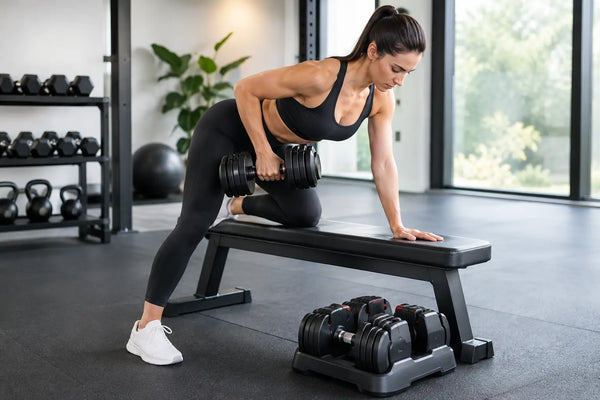


Adjustable Bench Weight Capacity Explained

A bench can look substantial on a showroom floor and still be the limiting factor in a serious dumbbell workout. Adjustable bench weight capacity is the specification that tells you whether the bench is engineered for your intended training load, body weight, and style of use. It deserves the same attention as a rack's rating, a barbell's tensile strength, or a cable machine's weight stack.
For a home gym, the right capacity supports confident progression without buying more bench than the room, budget, or training plan requires. For a studio, hotel gym, or commercial facility, it also affects equipment lifespan, member confidence, and the ability to accommodate a wide range of users.
What Adjustable Bench Weight Capacity Actually Means
The first point to clarify is what the manufacturer means by capacity. In most cases, an adjustable bench's stated capacity refers to total load: the user's body weight plus the external weight being lifted. A 1,000-pound capacity, for example, does not mean the user can load 1,000 pounds of dumbbells. It means the combined force placed on the bench should remain within the published limit.
That calculation matters most with dumbbell pressing. A 220-pound lifter using two 100-pound dumbbells places a combined static load of roughly 420 pounds on the bench before accounting for movement. During setup, lowering, pressing, and returning the dumbbells to position, the frame, pads, adjustment system, and contact points experience changing forces rather than one perfectly still load.
Some brands separate user capacity from training load, while others publish a single total rating. Always read the product specification and owner documentation carefully. If the stated number is unclear, treat it as a point to verify before purchase rather than an assumption to make.
Why Capacity Is More Than a Number
A high rating is useful, but it is not a standalone measure of bench quality. Capacity should reflect a complete design: frame material, tubing dimensions, weld quality, hinge design, adjustment ladder or pop-pin system, front support, pad structure, and the bench's footprint on the floor.
A well-engineered heavy-duty bench feels composed when you set up with dumbbells, change positions, or train unilaterally. There should be minimal side-to-side movement, no distracting flex through the back pad, and no uncertainty at the selected angle. These are practical signs that the bench is managing force effectively.
The adjustment mechanism is especially relevant. Flat, incline, and decline positions shift your center of mass and change how force travels through the frame. An incline press places different demands on the back support than a flat press. A bench intended for repeated incline work needs secure engagement at every usable angle, not just a strong-looking central frame.
Capacity also does not replace correct use. Dropping dumbbells onto the pads, using a bench on an uneven surface, or exceeding the intended exercise configuration can compromise even commercial-grade equipment. The load rating is a design limit, not permission to use the bench carelessly.
How Much Adjustable Bench Capacity Do You Need?
The best choice depends on the heaviest realistic session you expect to perform over the life of the bench, not only the weight you lift this month. Think about your current body weight, likely strength progression, whether you train with dumbbells or a barbell, and whether multiple people will use the equipment.
For general home training, a bench with a credible total load rating well above your current combined body-and-training weight gives useful room to progress. A beginner who plans to work mainly with moderate dumbbells may not need the same specification as an experienced lifter performing heavy incline dumbbell presses. Still, choosing a bench with reasonable headroom is often a better long-term decision than replacing an entry-level model after a short period of progression.
Dedicated strength athletes should pay closer attention to the upper range of published capacity and the construction behind it. Heavy dumbbell work, one-arm rows, chest-supported rows, hip thrust variations, and other demanding movements can put substantial force through a bench. The appropriate option is usually a heavy-duty adjustable bench with a stable base, substantial steel frame, secure angle adjustments, and a rating that comfortably covers the athlete's expected total load.
In commercial settings, capacity must account for variation. A facility cannot select equipment around one person's numbers. Gyms, corporate wellness spaces, hotels, and training studios need benches that accommodate a broad member base and repeated daily use. Commercial-grade construction, serviceable components, and clear manufacturer ratings are often more valuable than a compact design optimized only for occasional home use.
Calculate Your Total Working Load
A simple planning calculation can make comparison easier:
Body weight + external weight = estimated total static load
For dumbbells, include the total weight of both dumbbells. If a 200-pound user presses a pair of 90-pound dumbbells, the estimated static total is 380 pounds. That number is not the final purchasing decision. The bench should have a meaningful margin above it to reflect future progress, movement, different exercises, and repeated use.
Avoid selecting a bench that only barely meets your current calculation. A published rating close to your maximum may technically work, but it leaves little room for the way real training changes. You may gain body weight, purchase heavier dumbbells, add advanced movements, or share the equipment with another lifter.
The same thinking applies to a facility purchase. Consider the strongest likely users, not the average user. A bench that is under-specified for a small percentage of members can create an avoidable operational weakness in an otherwise well-equipped strength area.
Bench Features That Support Heavy Training
When comparing adjustable benches with similar capacity ratings, look beyond the headline number. The following construction details help explain how a bench performs under load:
- A heavy-gauge steel frame designed to resist twisting and flexing.
- Wide, stable contact points and durable rubber feet that help keep the bench planted.
- A secure ladder-style or pin-based adjustment system with clearly defined positions.
- Dense, supportive upholstery that maintains its shape and provides reliable contact during presses and rows.
- A gap and pad design that supports comfortable positioning across flat and incline angles.
- Transport wheels and a handle that make a heavier bench practical to move without compromising its working footprint.
Flat, Incline, and Decline Positions Change the Demand
A bench may have an impressive flat-position rating but offer fewer adjustment positions or a less substantial support system for incline work. If your programming includes incline presses, seated shoulder presses, supported rows, or adjustable-angle dumbbell work, assess the bench as an adjustable tool rather than a flat platform with extra settings.
The back pad should lock firmly at each position, and the seat should provide enough support to limit unwanted sliding during incline pressing. A poor seat angle can make a bench feel unstable even when its capacity is high on paper. Comfort here is not a cosmetic detail. Better positioning helps the lifter maintain controlled contact with the bench and focus on the exercise.
Decline capability is similarly situation-dependent. It can expand exercise options, but not every home or facility needs it. If decline training is central to your program, confirm the bench is specifically designed for that position and understand whether the rating applies across all configurations.
Capacity, Floor Space, and Facility Planning
Higher-capacity benches are typically heavier and may have a larger footprint. That is often a worthwhile trade-off for stability, but it matters in compact home gyms and tightly planned commercial floors. Measure the bench in its flat and fully inclined positions, then allow room for the lifter, dumbbell setup, and safe movement around the station.
For a commercial project, bench selection should align with the surrounding equipment layout. A heavy-duty adjustable bench paired with appropriately rated dumbbells, storage, flooring, and training space creates a more cohesive strength environment. The goal is not simply to fit equipment into a room. It is to create stations that members and coaches can use comfortably and repeatedly.
For buyers outfitting homes or facilities across the Gulf, 1 REP MAX Fitness can help translate these equipment specifications into a practical strength setup, including the balance between capacity, footprint, training goals, and expected daily use.
Before You Buy, Check the Specification Sheet
The most reliable purchase decision comes from comparing published technical details rather than relying on appearance alone. Confirm whether the number is total capacity, check the bench weight and dimensions, review the available incline and decline angles, and consider the warranty and intended use classification.
Then picture your heaviest normal session a year from now. The right bench is not the one with the largest number by default. It is the one whose rated capacity, stability, adjustment range, and footprint continue to support your training with confidence as the weight on the dumbbells increases.
Smith Machine Safety Features That MatterNext →
Choosing the Right Cable Machine for Home Gym